EN
EN  FR
FR 

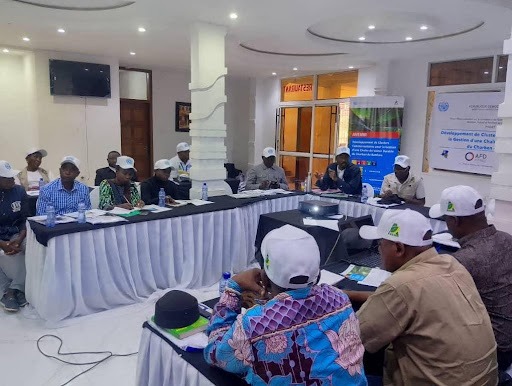
A participatory dialogue workshop was held on Friday, July 11, in Mbanza-Ngungu, in the Kongo Central province, under the leadership of theUnited Nations Industrial Development Organization (UNIDO),as part of the implementation of the AVENIR Project, led by the Congolese government through the Ministry of Agriculture and Food Security.
This workshop is part of the ongoing effort to develop community clusters for the sustainable management of the green charcoal value chain, particularly from bamboo,a natural resource with strong ecological and economic potential. The initiative aims to achieve a sustainable transformation of family farming by integrating climate-resilient solutions while promoting rational natural resource management.
Through this approach, UNIDO aims to address one of the main drivers of deforestation in the DRC: unsustainable wood energy exploitation. The goal is to directly involve local communities and entrepreneurs in the establishment of a sustainable, traceable, and environmentally friendly value chain.
Speaking at the opening ceremony, Willy Makumbani, Administrator of the Mbanza-Ngungu Territory, welcomed this initiative, which he considered "a real lever for reforestation and local development." He also emphasized that Mbanza-Ngungu has vast areas favorable to bamboo cultivation.
For his part, Hamidou Loukine,National Coordinator of UNIDO programs, presented the project's objectives, strategic focuses, and expected results, covering the production, processing, and marketing of sustainable charcoal that meets environmental standards.
Guylaine Matindi, Head of the AVENIR Project in Mbanza-Ngungu, detailed the role UNIDO will play in developing community clusters. The approach consists of actively involving local populations in the adoption of bamboo charcoal as a sustainable alternative, while integrating their opinions into the environmental decision-making process. Participants were made aware of the economic and ecological benefits of bamboo production and processing, particularly as a clean and renewable fuel. Several recommendations were made to improve project ownership by beneficiary communities.
Participants were made aware of the economic and ecological benefits of producing and processing bamboo, particularly as a clean, renewable fuel. A number of recommendations were made with a view to ensuring greater ownership of the project by the beneficiary communities.
The project is structured around four main pillars:
- Raising awareness about environmental protection and the promotion of bamboo and other fast-growing species;
- Developing community nurseries and plantations for the production of bamboo shoots as an alternative to forest firewood;
- Building local capacity through the structuring of clusters for the processing and management of green charcoal;
- Developing a regulatory framework to ensure traceability, certification, and environmental compliance throughout the value chain.
It should be noted that this workshop brought together community stakeholders, environmental experts, representatives from the Ministry of Agriculture and Food Security, and members of the organizations involved in implementing the AVENIR Project. All reaffirmed their commitment to supporting this initiative, which could mark a significant turning point in the energy and environmental transition at the local level.
Radio Ngunga Fm, Mbanza-Ngungu