EN
EN  FR
FR 

Improving agricultural practices is essential to ensuring food security and economic development in rural communities. In this spirit, the AVENIR Project places the training of Farmer Field School (FFS) facilitators at the heart of its strategy. This innovative program allows farmers to acquire practical skills adapted to their environment, while promoting direct experience sharing among producers. Furthermore, it ensures the sustainability and effectiveness of the actions undertaken, thus contributing to the sustainable development of the agricultural sector.
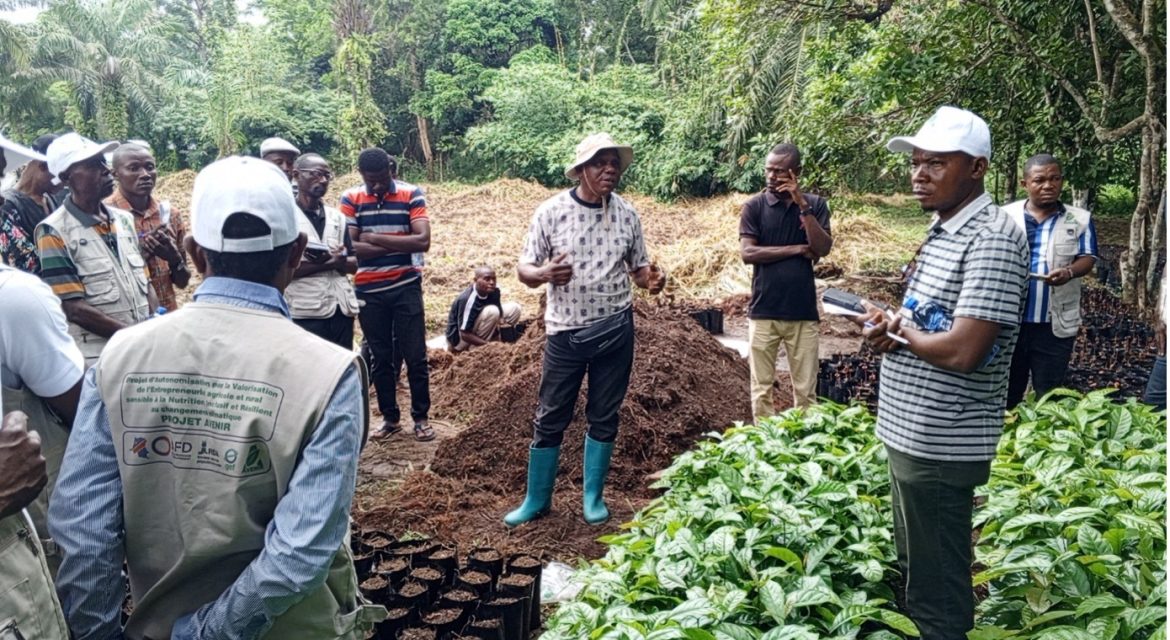
Therefore, the AVENIR Project contracted with GI-AGRO to train FFS facilitators in agroforestry techniques for restoring fertility and diversifying income and to support the implementation of the 48 FFSs in the four provinces by master trainers.
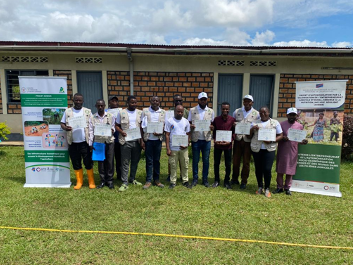
Avec le soutien et l’encadrement de l’ONG GI AGRO, le Projet AVENIR a activement contribué à cette formation des facilitateurs, qui s’est déroulée du 14 au 23 avril 2025 à Kisantu, dans la province du Kongo Central.
Les objectifs de cette formation étaient notamment de renforcer les capacités pédagogiques des facilitateurs pour encadrer les agriculteurs dans les zones d’intervention du projet, d’assurer une transmission efficace des connaissances techniques et pratiques et de favoriser l’apprentissage collaboratif en s’appuyant sur les expériences des producteurs eux-mêmes.
La formation s’est appuyée sur des principes d’apprentissage actif et interactif, notamment l’observation et l’expérimentation, permettant aux participants de tester diverses pratiques agricoles directement sur le terrain. Elle a également favorisé les discussions et échanges, où les facilitateurs ont été encouragés à stimuler le partage de connaissances et d’expériences entre les agriculteurs.
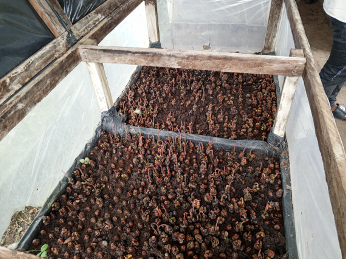
The training also addressed several key aspects: subsistence and market gardening, agropastoral farming, beekeeping, and fish farming, while taking nutritional security into account.
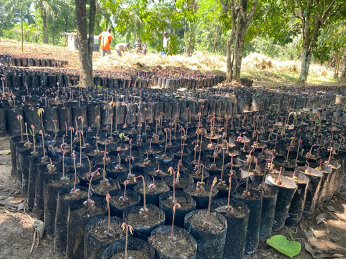
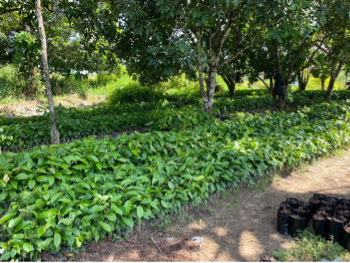
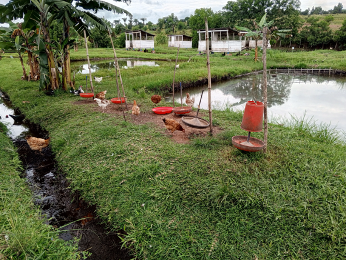
Participants thus gained a firsthand understanding of the realities on the ground regarding adapted agricultural practices, such asagroecology,the crop rotation andthe use of improved seeds,which optimize yields while preserving soil fertility. And, the approach agropastoral which combines ,livestock farming andand agriculture,allows for sustainable land management and diversification of income sources. Crops are used to feed livestock, while animals provide natural fertilizers and improve soil productivity.
Beekeeping, as a strategic activity, plays a dual role: not only does it enable the production of honey and its derivatives, but it also contributes to crop pollination hus promoting improved agricultural yields. This practice was also implemented in the field during the training.
Finally thefish farming is a key solution for ensuring a regular supply of animal protein, particularly in areas where fishing is limited, such as the territories of Mbanza Ngungu, Masimanimba, Kenge, Lukula, and Kikwit.
Ms. Ariane Mbungu Apingi,, facilitator at the Maï-Ndombe Agricultural Producers' Organization Training Program, expressed her gratitude to the AVENIR Project and its partner GI-AGRO for their commitment.
She stated:
« Je tiens à remercier chaleureusement le Projet AVENIR et GI-AGRO pour cette formation enrichissante en Champ École Paysan. Leur approche pédagogique et leur engagement m’ont permis d’acquérir des connaissances essentielles et des compétences pratiques. Ces apprentissages me seront précieux pour améliorer mes méthodes agricoles, relever les défis du terrain et transmettre efficacement ces savoirs aux agriculteurs de notre zone d’intervention. Cette expérience a été marquée par un esprit de partage, de collaboration et d’apprentissage collectif. Je repars avec des outils concrets et une nouvelle vision de l’agriculture durable. J’exprime aussi ma profonde gratitude au Gouvernement Congolais ainsi qu’à ses partenaires financiers, notamment le FIDA, l’AFD et le GEF pour leur précieux soutien et leur engagement dans la mobilisation des fonds. Grâce à leur disponibilité, les objectifs du projet sur ce volet ont pu être atteints avec succès. »
Speaking to close this capacity building session, Mr. Alain MWAMIAGANZE BAHATI,, the Deputy National Coordinator and Monitoring and Evaluation Manager of the AVENIR Project, expressed himself in these words :
" La formation des facilitateurs s’est déroulée avec succès. Les participants ont pris part activement au processus, et nous sommes convaincus qu’ils disposent désormais des compétences nécessaires pour assurer efficacement l’animation des CEP ».
On behalf of the National Coordinator, Mr. Justinien BACIRONGO BINYOMAhe added:
" Nous adressons nos sincères remerciements à toutes les fédérations partenaires du projet qui ont mobilisé leurs membres et facilitateurs, ainsi qu’à notre partenaire ONG GI AGRO, pour son engagement dans l’encadrement de ces facilitateurs durant près de deux semaines. Nous exprimons également notre gratitude à la structure d’accueil FERME CEDEF, qui nous a offert un cadre exceptionnel tout au long de la formation. »
At the end of this training, the 30 facilitators trained to be trainers of the Farmer Field Schools (FFS) acquired enhanced skills, integrating good agro-sylvo-pastoral techniques intended to restore soil fertility and and diversify farmers sources of income.




Hyperbole Mwanandeke